07 · Form Study · 2026
Unfold
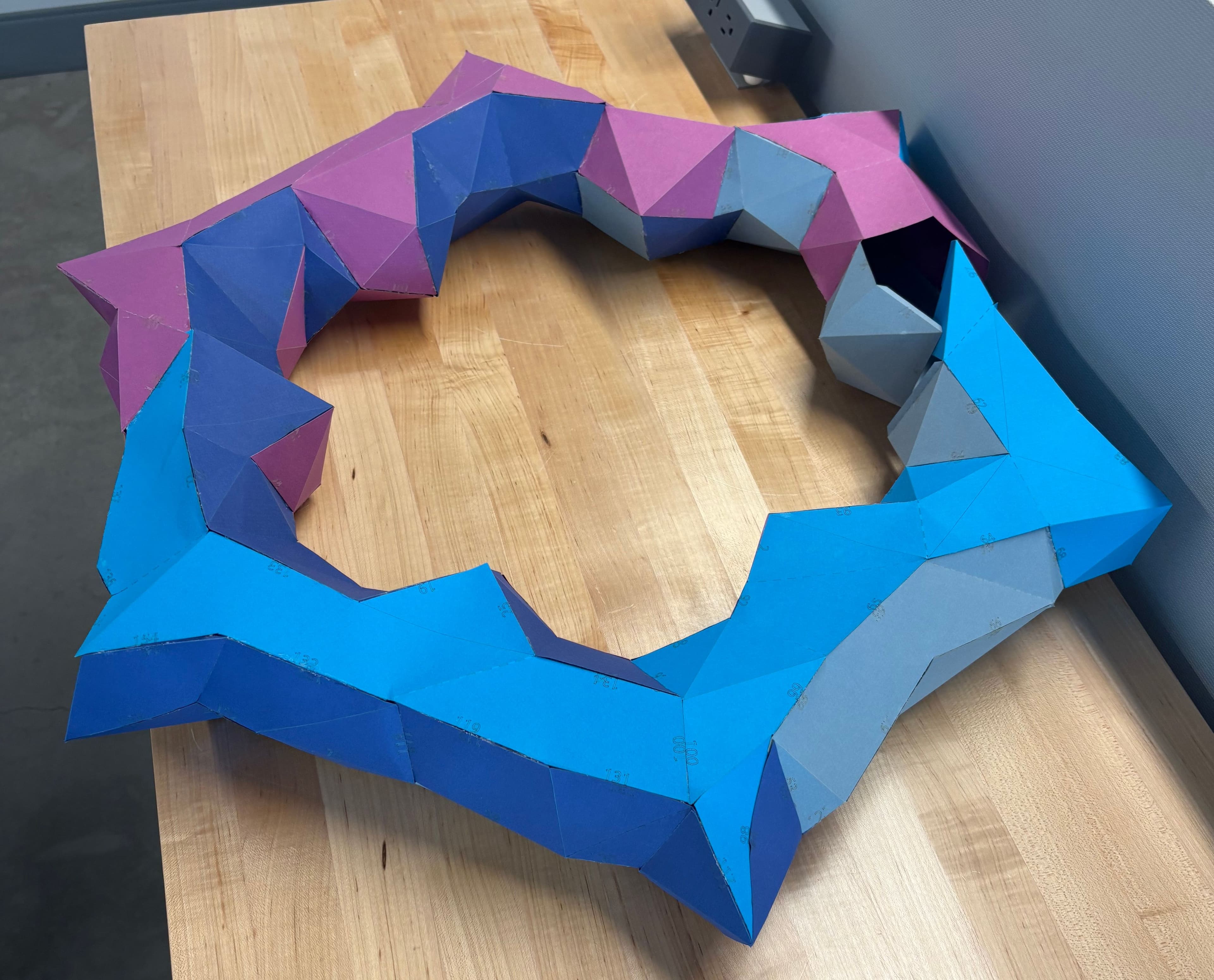
A digital-to-physical form study exploring how three-dimensional geometry can be modeled, unfolded, fabricated, and integrated into a larger collective installation.
Context
Created during Design Fundamentals as a paper-form exercise focused on digital modeling, unfolding, and physical assembly.
Tools
Rhino · Pepakura · Hand Cutting · Scoring · Folding
Material
Paper
01 · Digital Form
Starting in three dimensions
I modeled a star-based form in Rhino, developing a strong silhouette while considering how the geometry could ultimately be translated into folded paper.
02 · Unfolding
Translating volume into a flat pattern
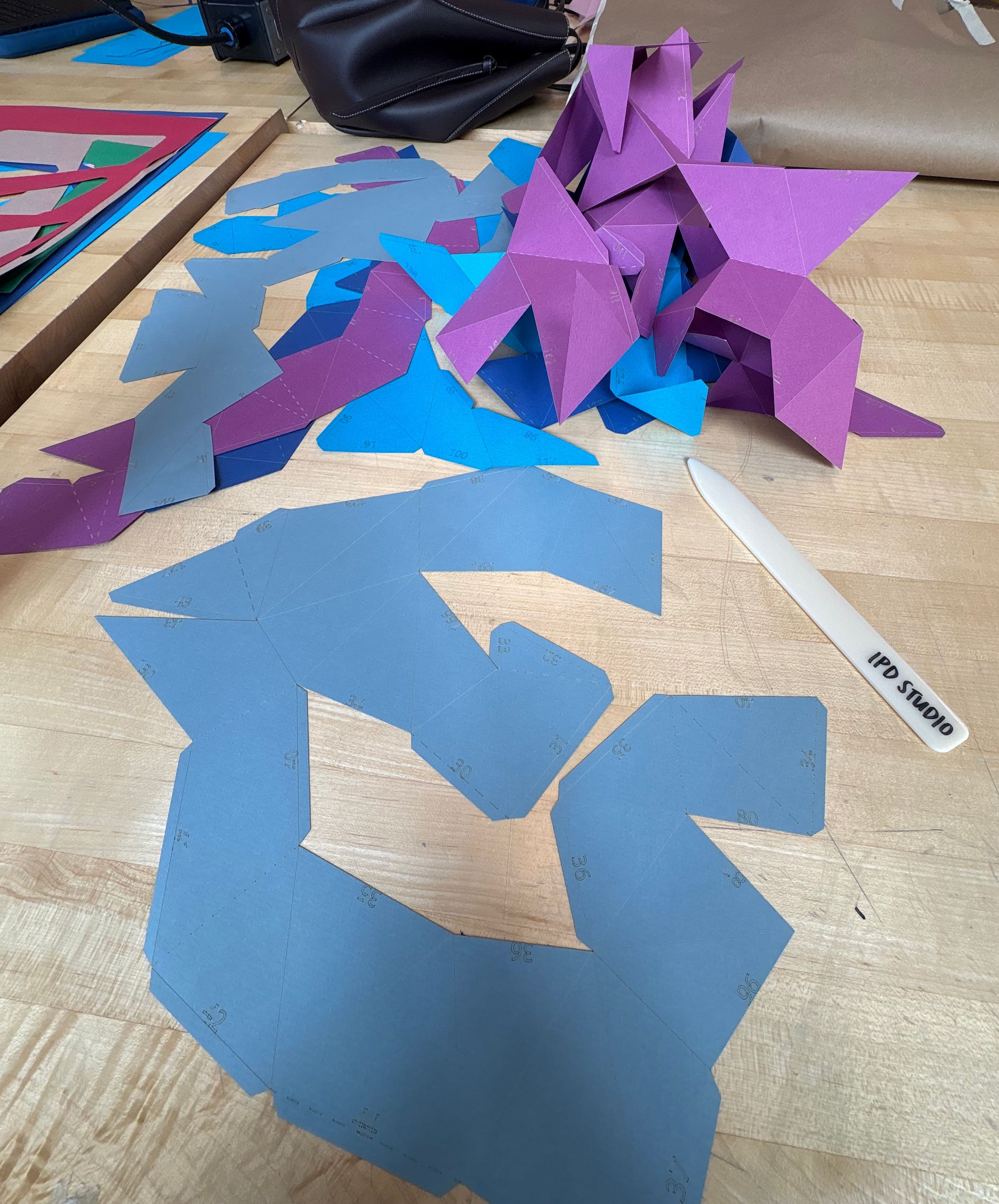
I brought the model into Pepakura to unfold its surfaces into a two-dimensional net, determining where the form could open, reconnect, and fold back into volume.
03 · Assembly
Rebuilding the digital form by hand
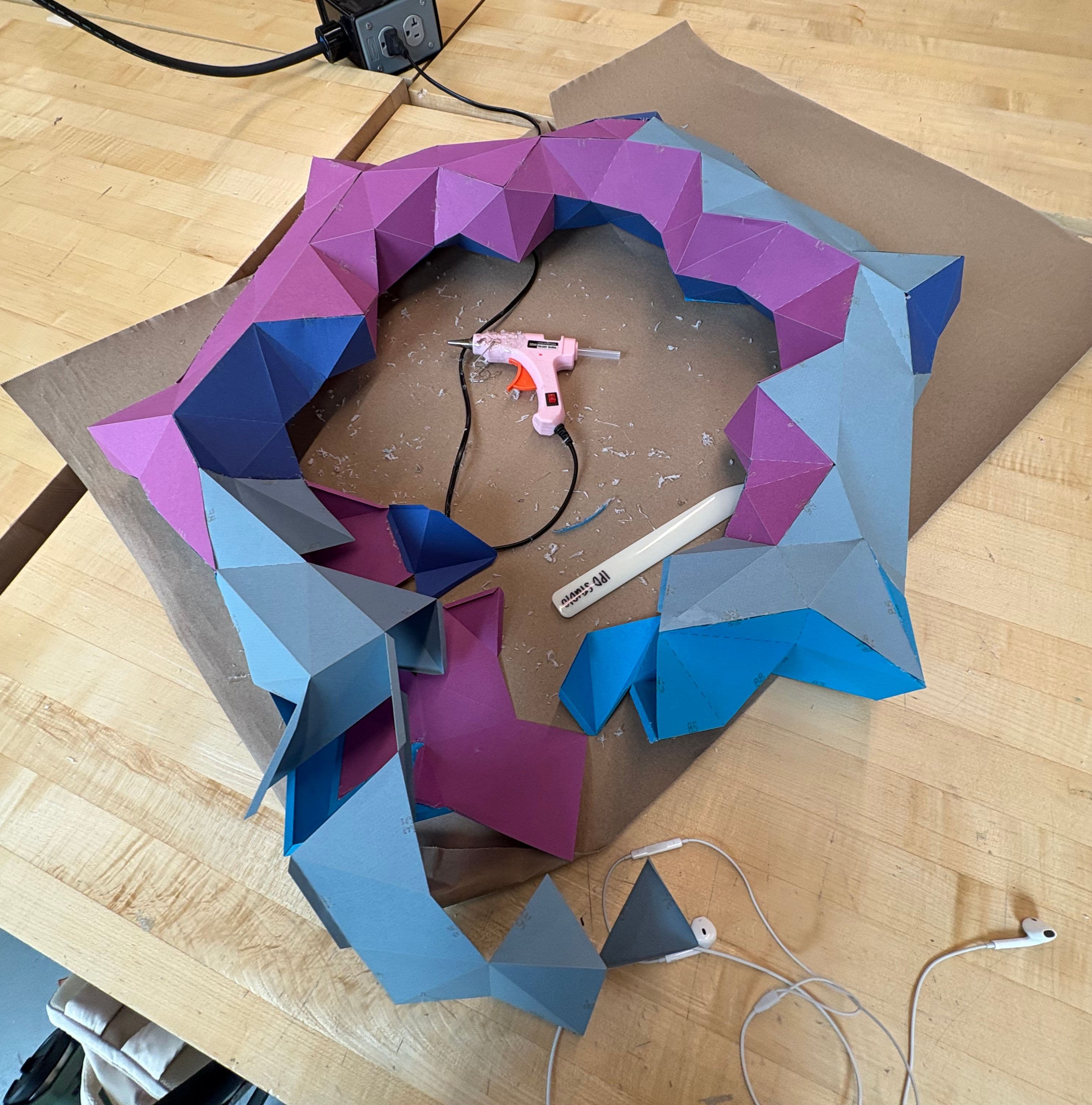
The patterns were cut, scored, folded, and joined by hand. Small inaccuracies in the flat geometry became amplified in three dimensions, making precision and assembly sequence critical.
04 · Collective Installation
One form becoming part of a larger system
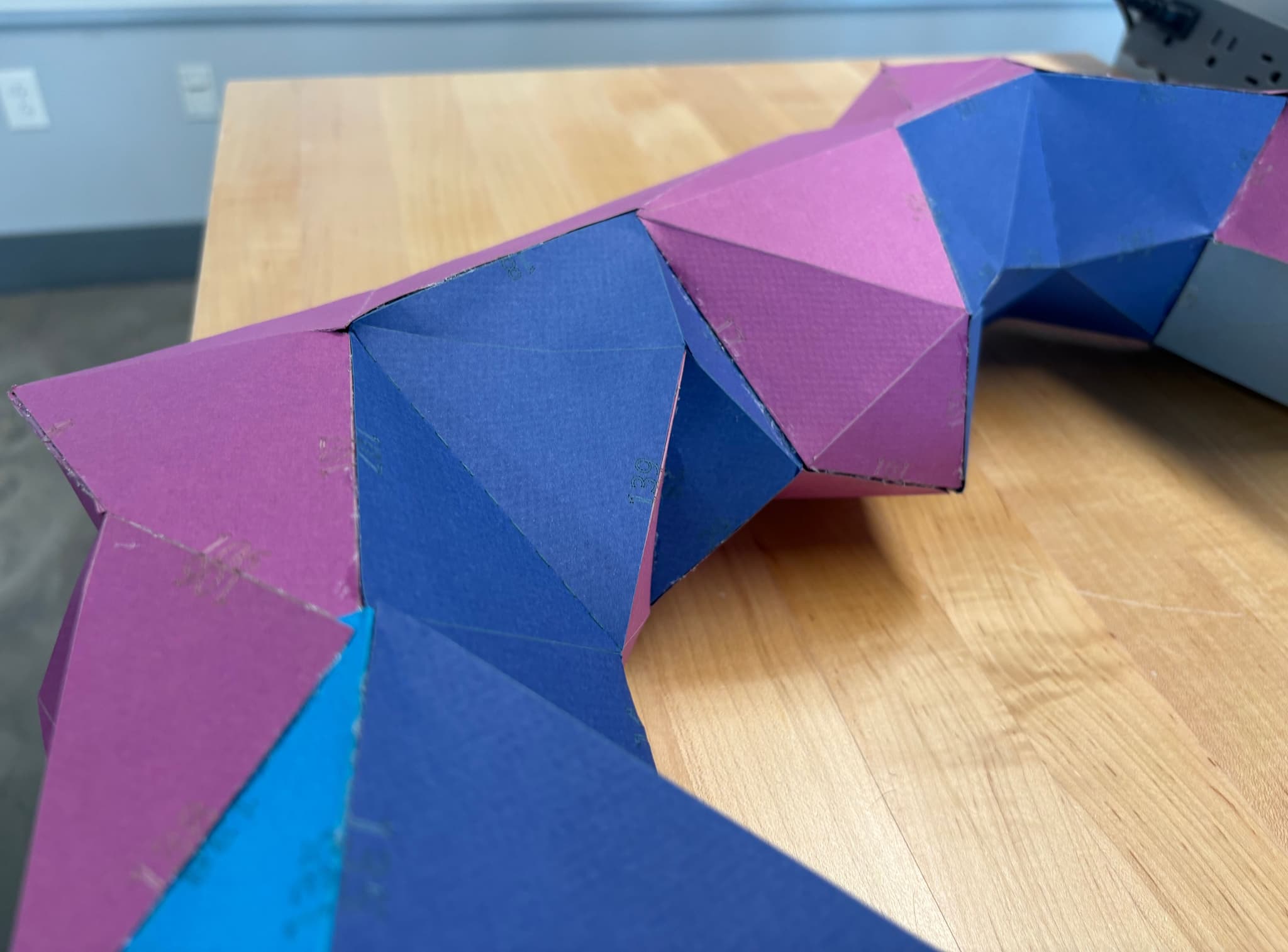
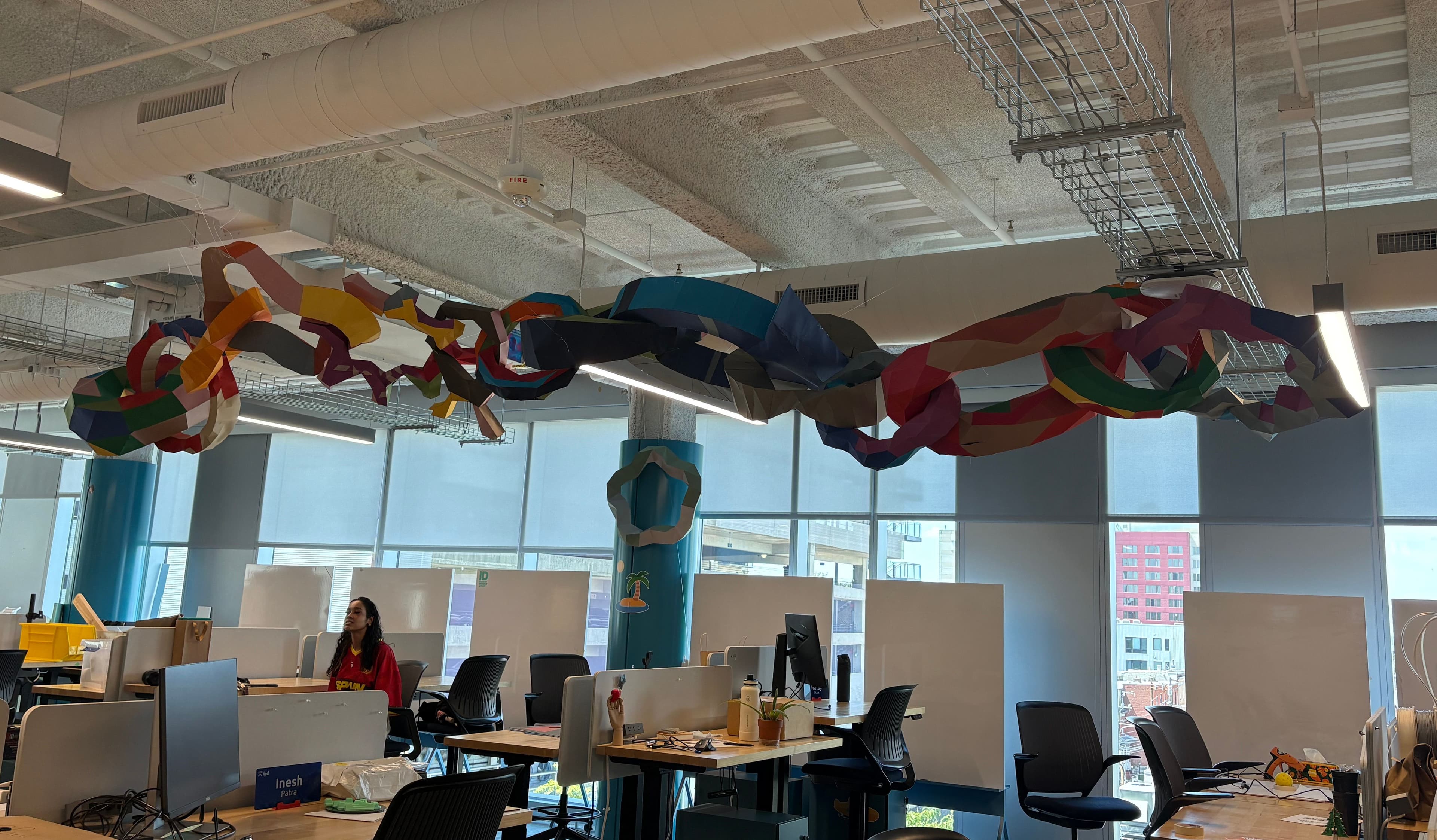
Each student created an individual paper form before the pieces were connected into a shared suspended installation. My object became one component within a larger spatial system of color, geometry, and interconnected forms.
Reflection
This project made the relationship between digital geometry and physical construction tangible. Translating a model from Rhino to a flat net and back into volume showed me how decisions about surfaces, seams, and tolerances directly shape the final object.