02 · Object Design + Fabrication · 2026
Pine Puzzle
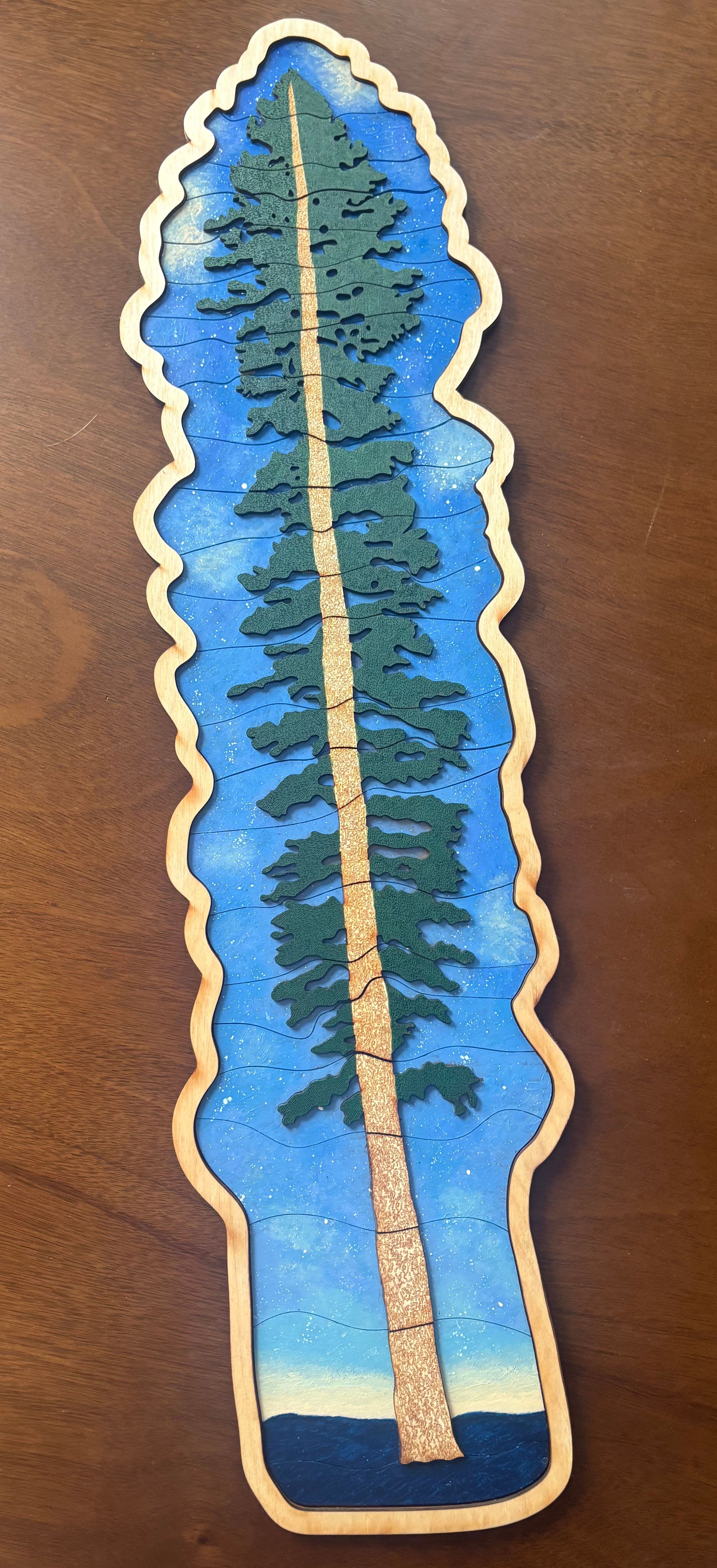
A custom wooden jigsaw puzzle inspired by the pine landscape surrounding my family's century-old cabin in Soda Springs, California.
Context
Created for How to Make Things as an exploration of puzzle geometry, visual composition, fabrication, and finishing.
Tools
Rhino · Adobe Illustrator · Laser Cutting · Hand Finishing
Materials
Wood · Acrylic Paint · Wood Stain · Adhesive
01 · Inspiration
Starting with a familiar landscape
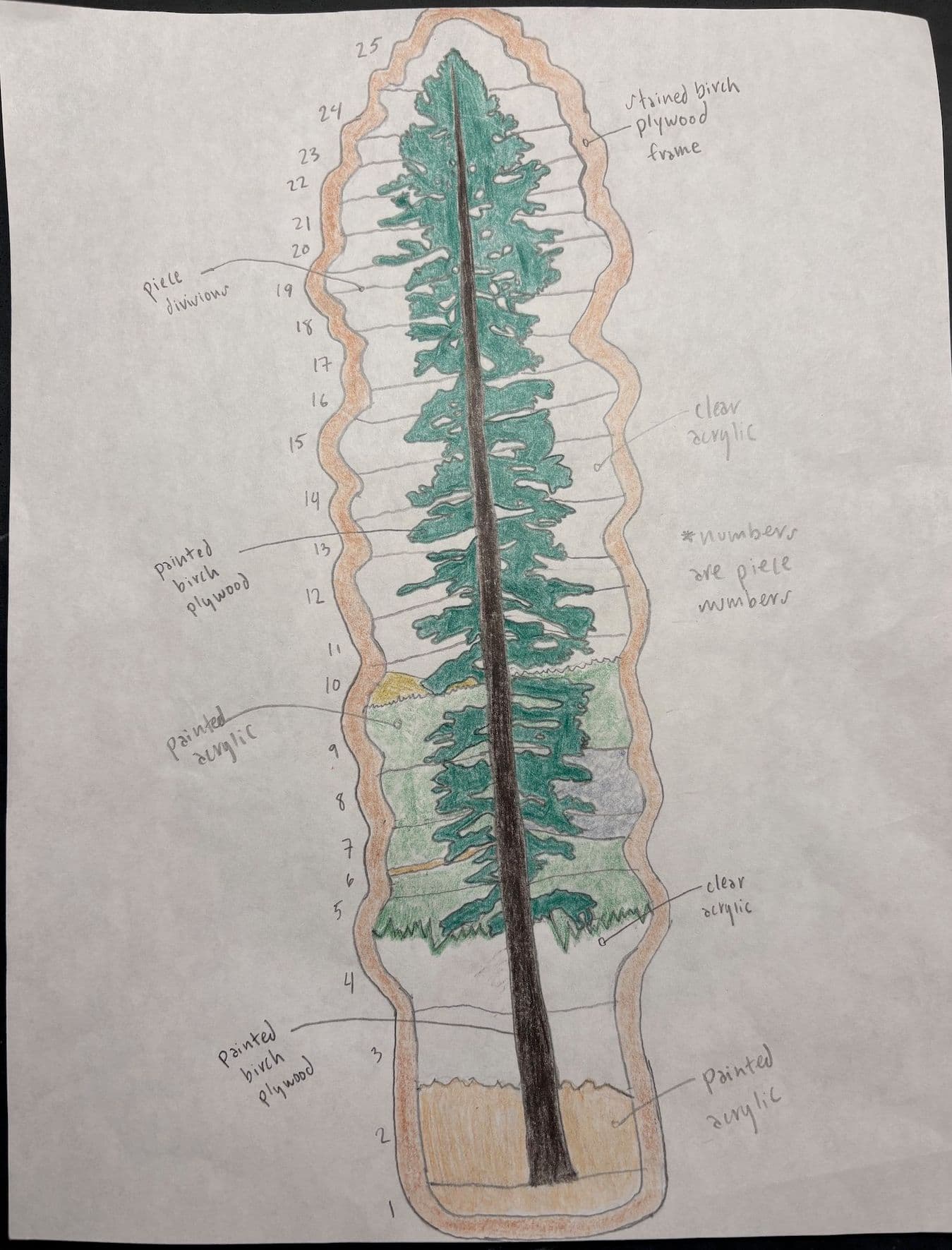
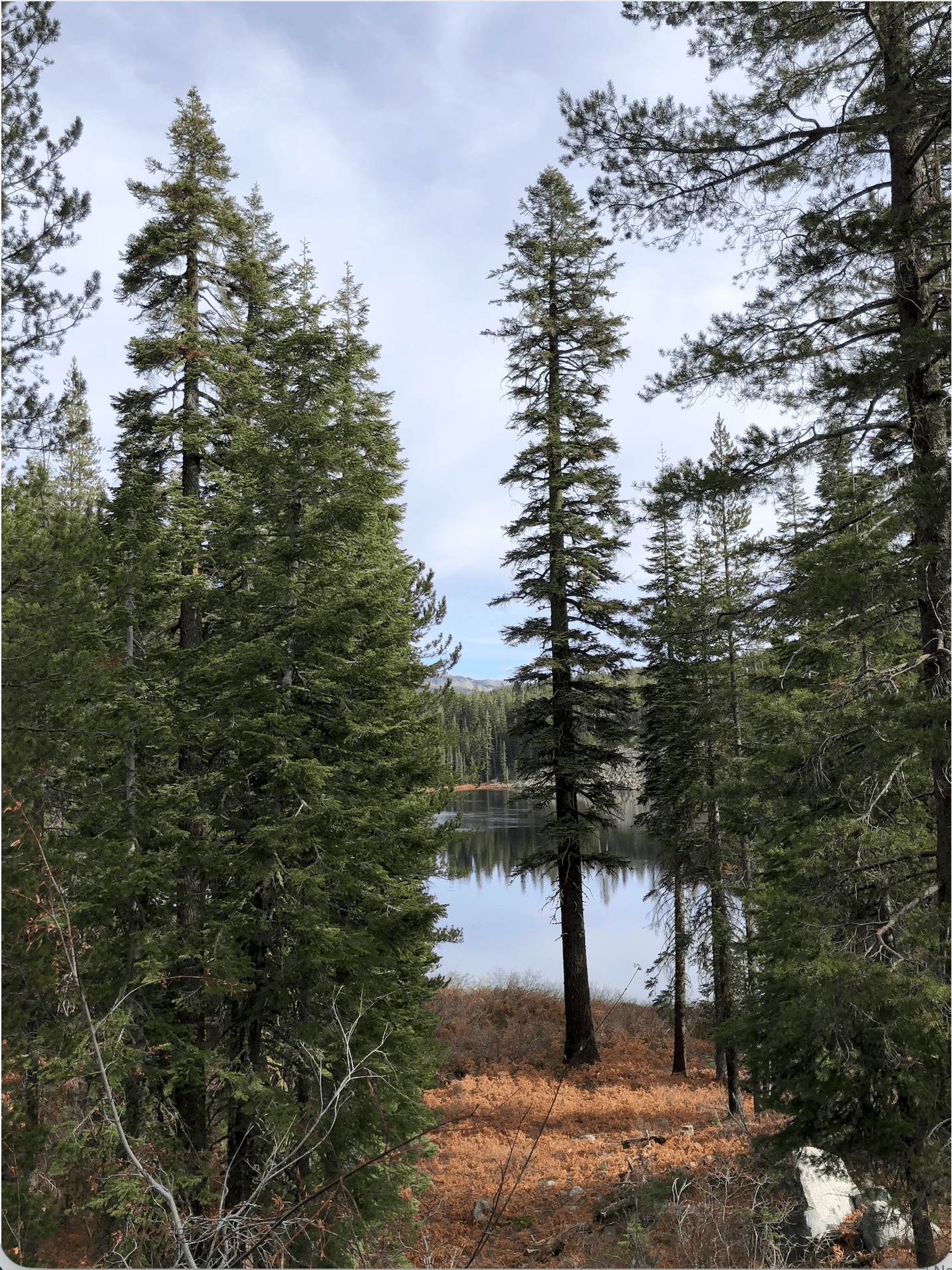
Pine Puzzle began with the tall pine trees surrounding my family's century-old cabin in Soda Springs, California. I wanted the object to capture the vertical scale and irregular silhouette of a single tree rather than rely on a conventional rectangular puzzle format.
02 · Concept Development
Designing the image and puzzle together
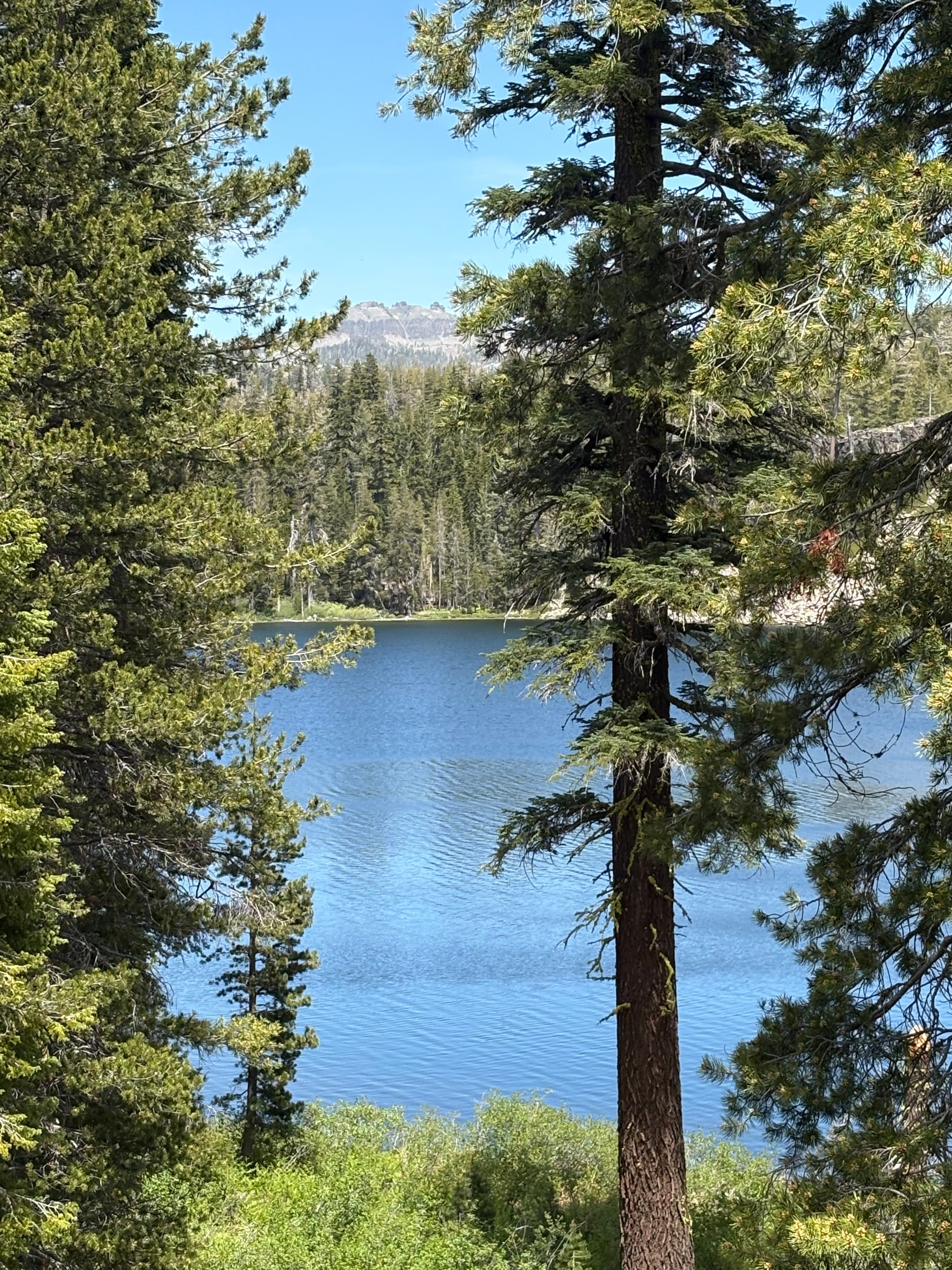
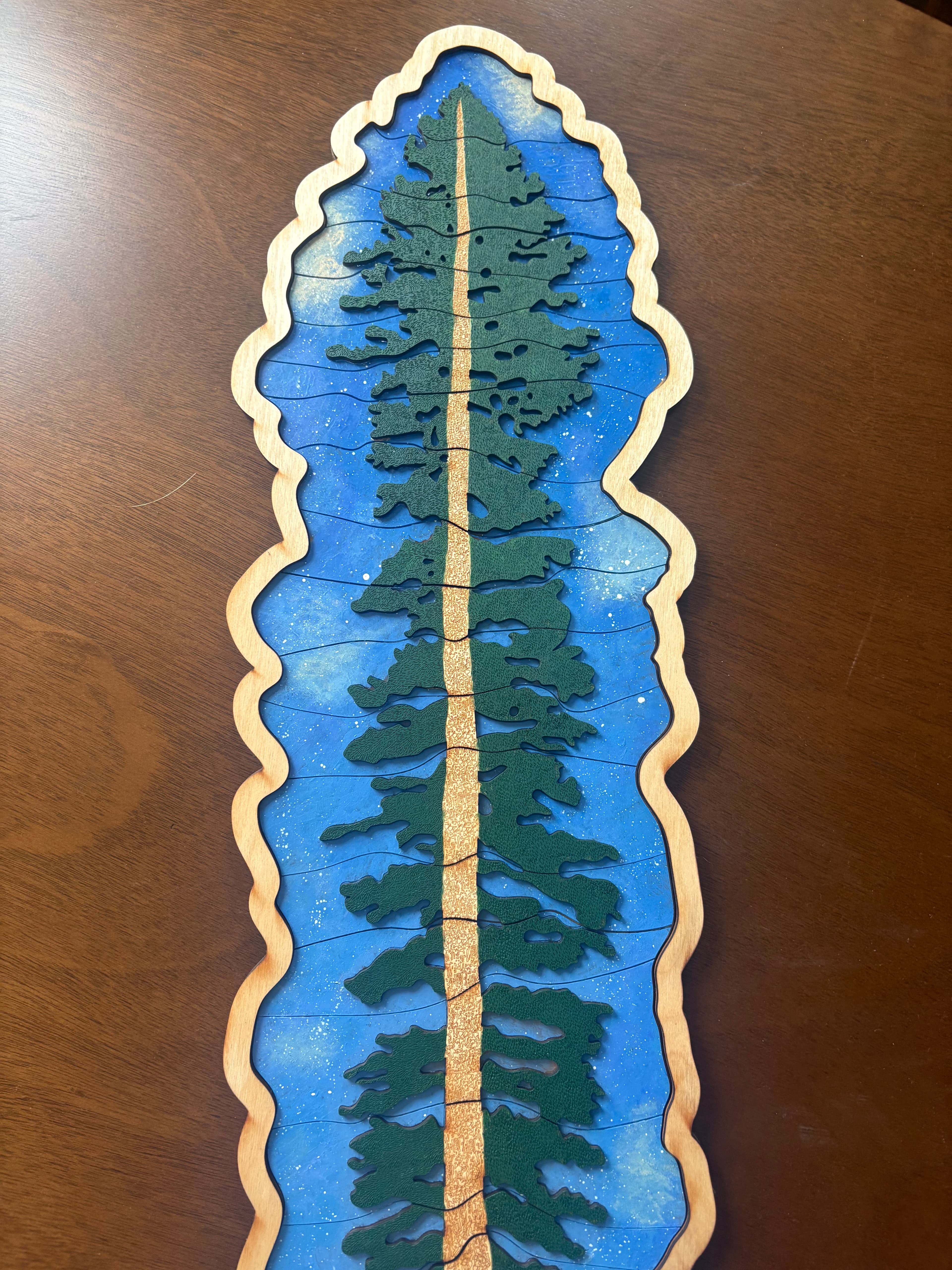
Rather than treating the illustration and puzzle geometry as separate layers, I developed them as one system. The tree became the central organizing element, while the surrounding sky, ground, border, and piece divisions were shaped around its silhouette.
03 · Fabrication
Testing at a smaller scale
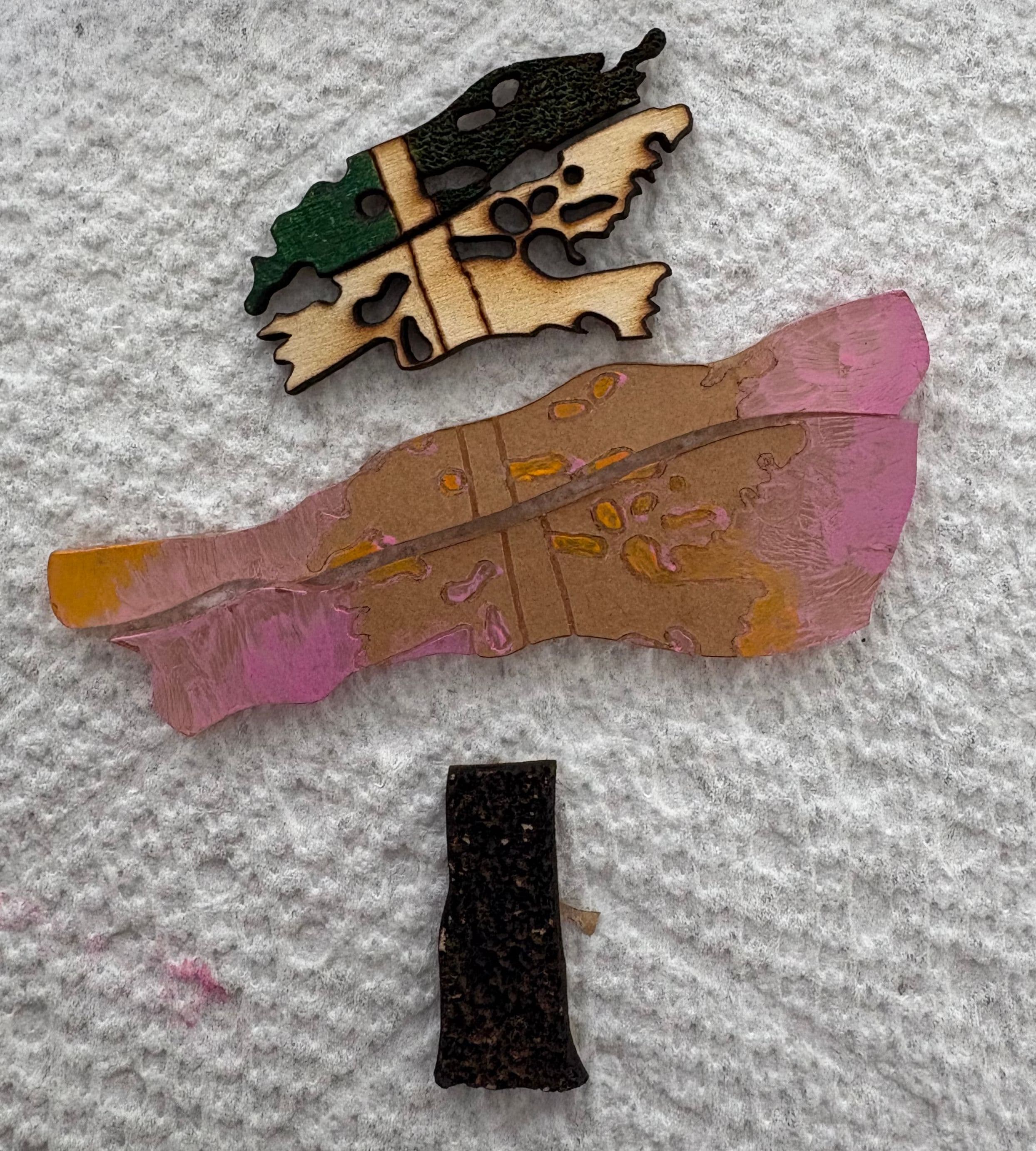
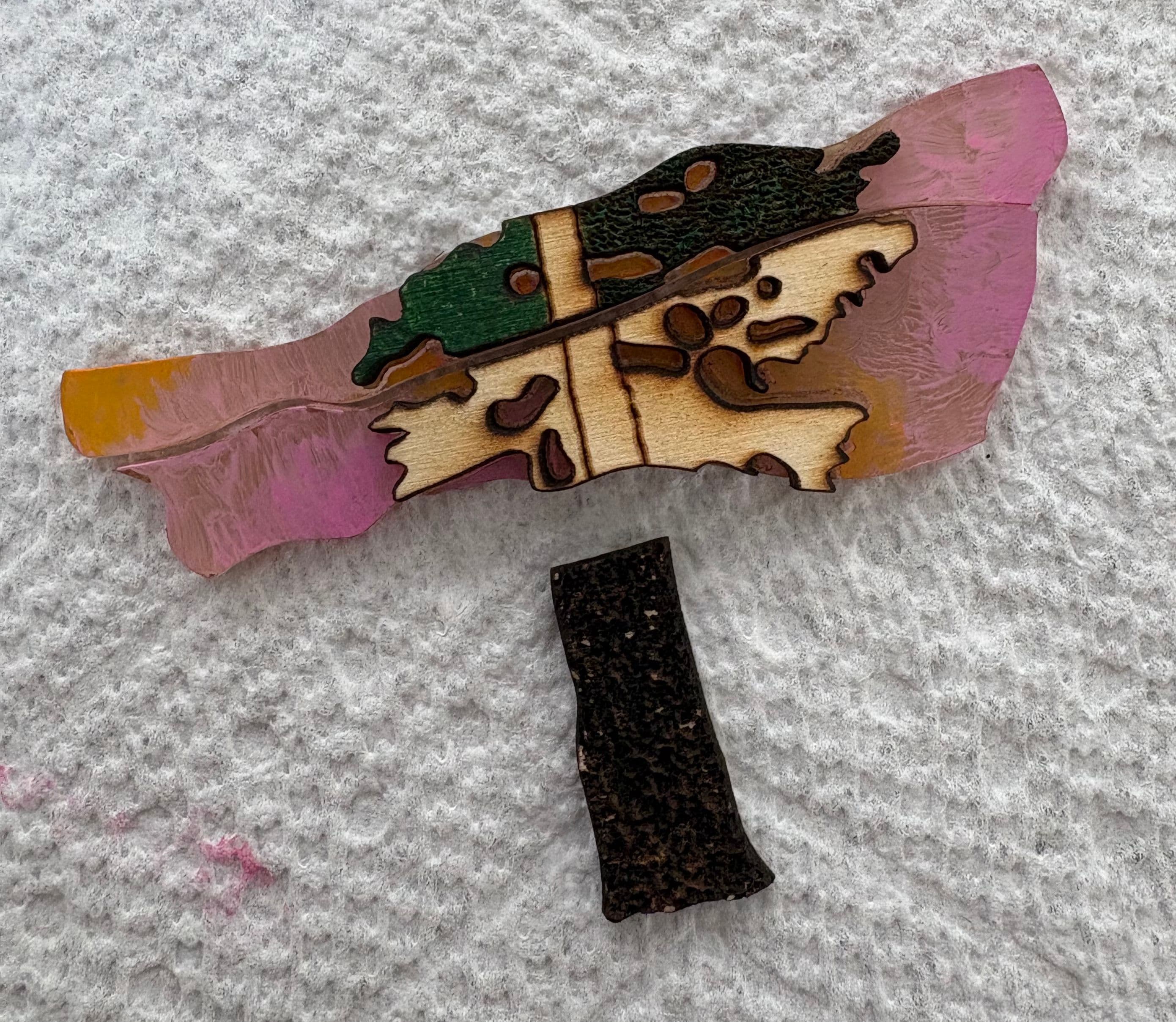
Before committing to the full-size puzzle, I laser-cut smaller prototypes to test the scale of individual pieces, the visibility of etched details, and how acrylic paint interacted with the wood.
Scaling the design up
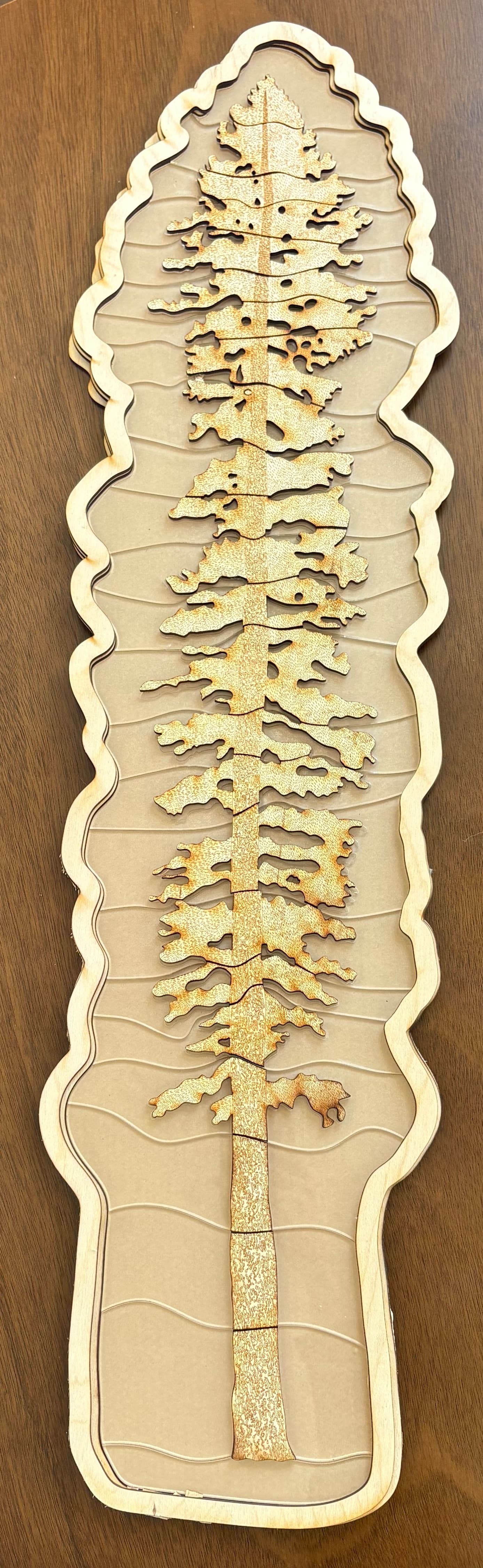
After validating the scale, etched details, and paint treatment, I translated the design into the full-size wooden puzzle. The larger format introduced narrow branches, interior openings, and irregular intersections that had to remain visually detailed while still producing workable puzzle pieces.
04 · Color + Finish
Building the landscape through color
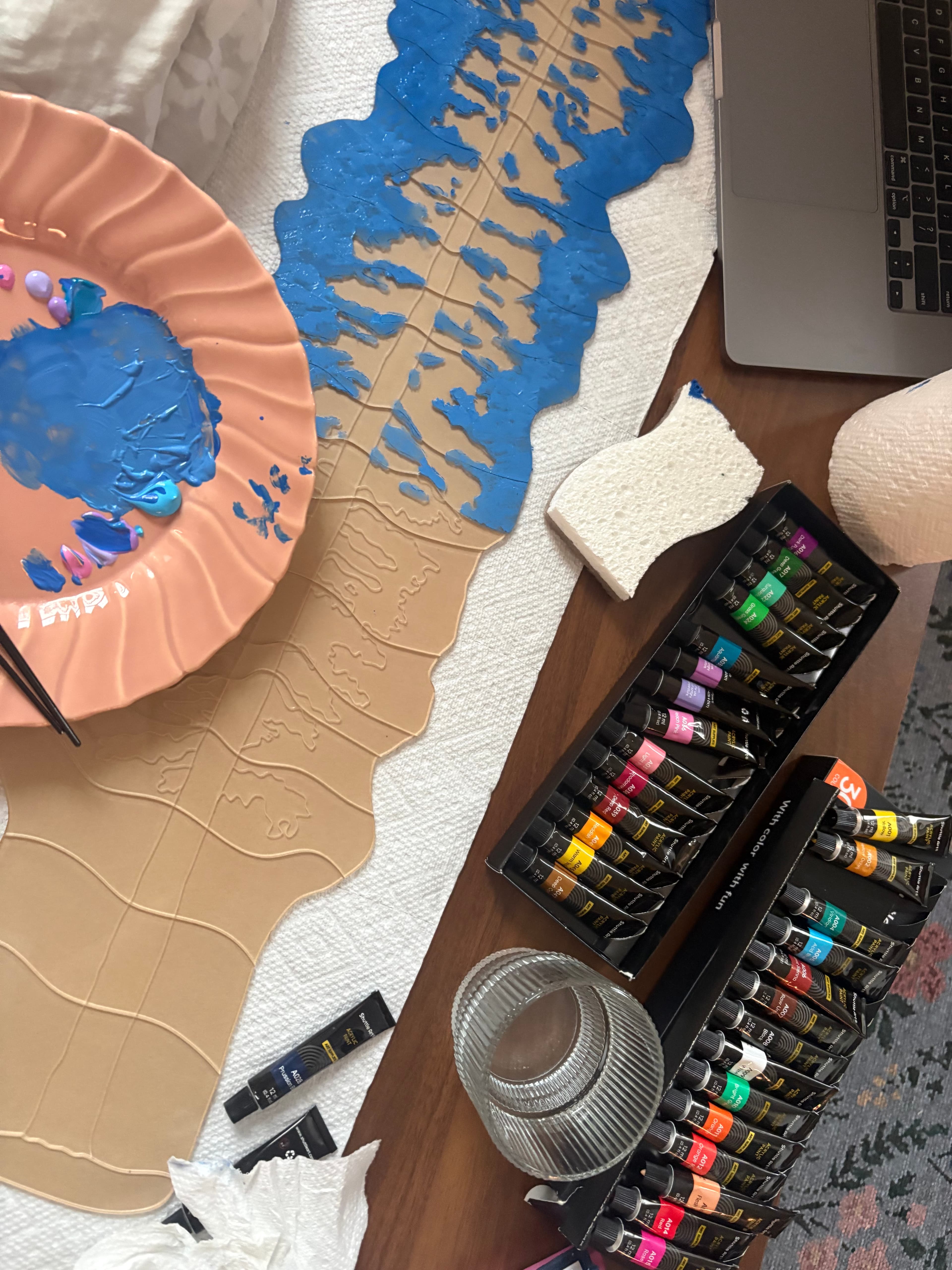
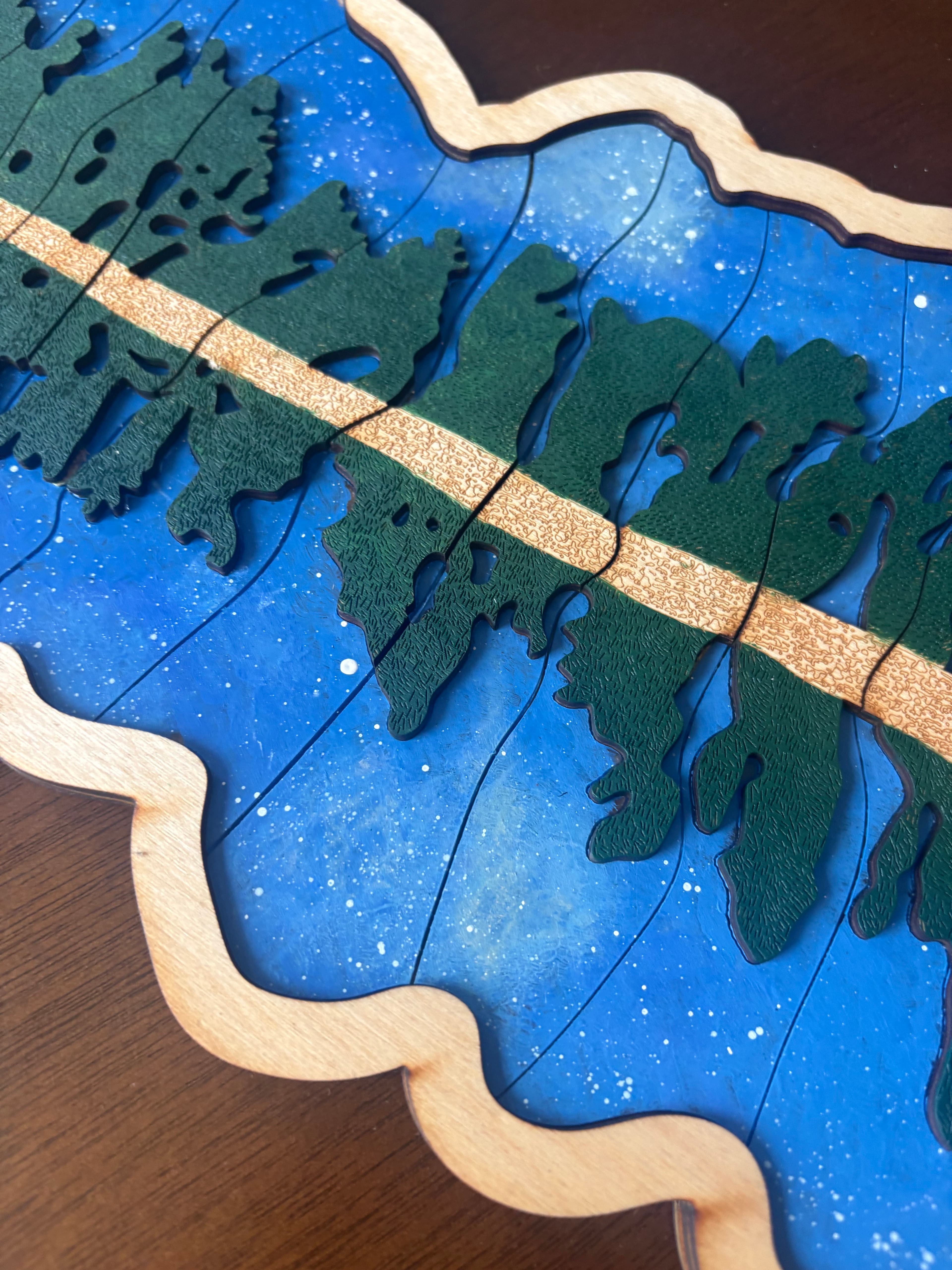
I tested several color approaches before committing to the final palette. Layered blues create the sky, while deep green defines the pine silhouette. Natural wood remains visible through the trunk and perimeter frame, keeping the material itself part of the final composition.
05 · Detail
Carrying the image across individual pieces
The image extends continuously across the puzzle. Branches, trunk, sky, and surface details cross piece boundaries so the illustration becomes inseparable from the structure of the puzzle itself.
06 · Assembly
A landscape distributed across parts
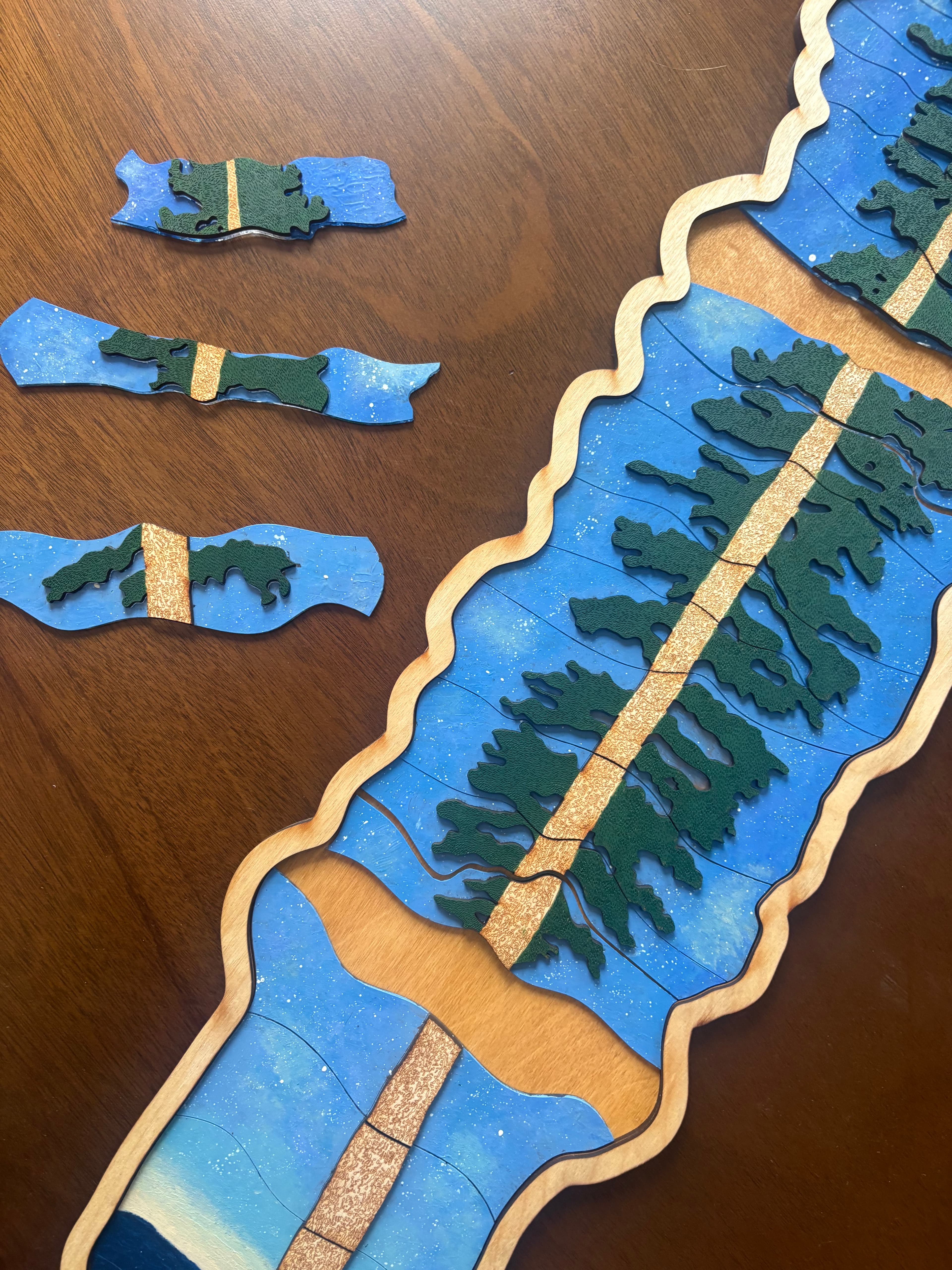
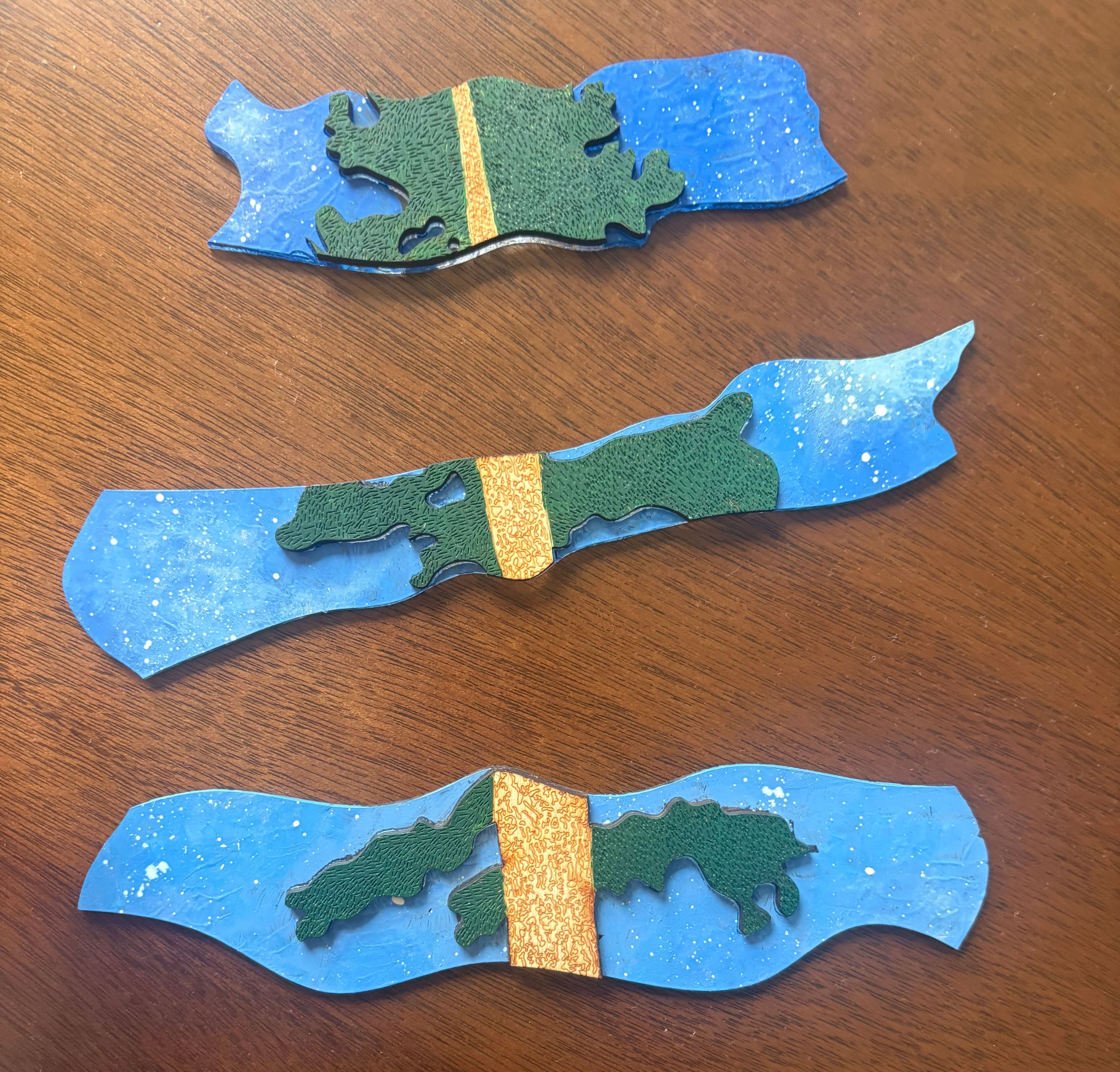
Removing individual pieces reveals how the image is distributed across the object. Each piece contains only part of the tree and surrounding landscape, becoming complete through its relationship with the rest of the puzzle.
07 · Final
A puzzle designed as both image and object.
Reflection
Pine Puzzle pushed me to think about image, object, and fabrication as one system. Decisions around silhouette, piece geometry, material, paint, and finish all affected both the appearance of the final object and the experience of assembling it.